
Training on a yacht: what works at anchor
A yacht is the most controlled environment in travel and the least documented one for anybody who trains. Movement, heat and where you spend the night change everything.
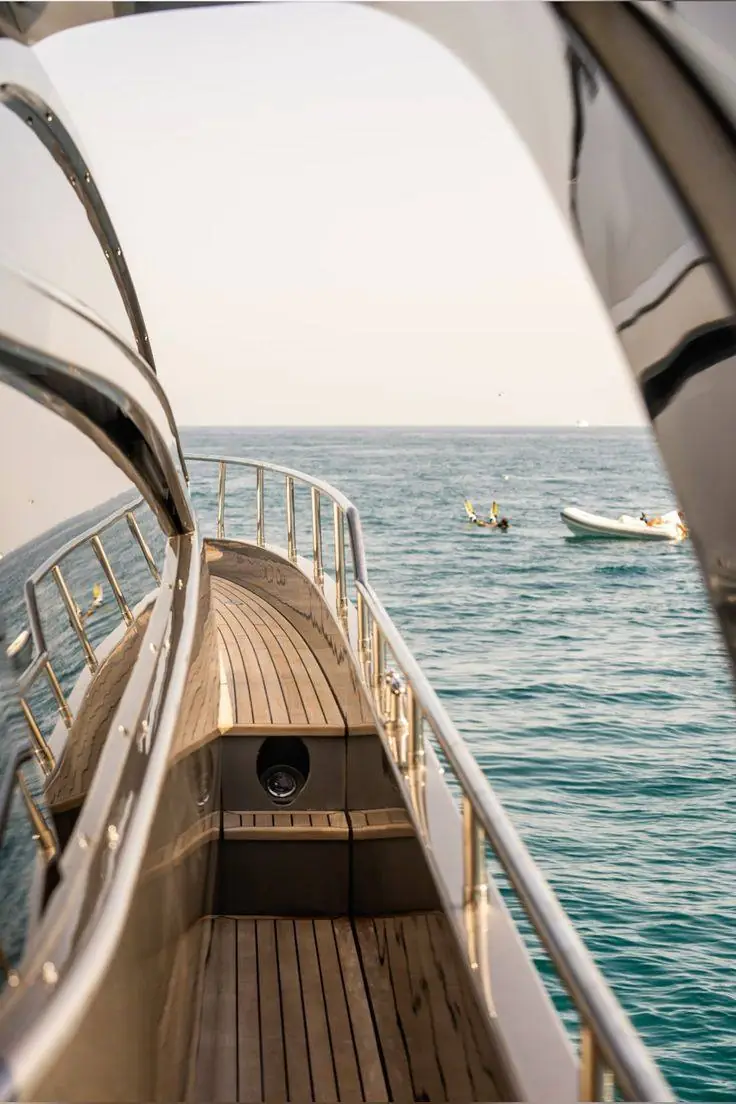
Three constraints govern everything on board. The boat moves, space is finite, and the deck is hot. Work with them and a week at sea is one of the better training environments available. Ignore them and it is a week of very good meals.
What works
Bodyweight and bands work anywhere and are unaffected by movement. Swimming off the transom is the best cardio on the boat by a distance, provided the crew can position the tender for safety and there is no current worth respecting. Rowing works well because the machine is fixed and the movement is linear. Kettlebells work at anchor and are a poor idea under way.
Free weights above shoulder height under way are the one thing to avoid outright. A swell you did not see coming while a heavy weight is over your head is not a training risk, it is an accident.
The minimum size, honestly
Below roughly thirty metres, training on board means bodyweight, bands and the water. That is not a small thing and it is enough for most people for a week. A dedicated gym with fixed equipment, air conditioning and headroom generally begins to appear from around forty metres, and it is worth asking whether the space is a gym or a cabin with a bike in it.
At sea, the best equipment on board is usually the water behind it.
Sleeping at anchor versus in port
This is the part nobody discusses and the part that decides the week. At anchor the boat is quiet, the air is clean and the movement is gentle, which most people sleep through well after the first night. In a marina you get flat water and, in season, generators, music, tenders and the light of the quay all night. If sleep is the reason you booked, ask the captain what the plan is for the nights, not only for the days.
Cabin position matters as much as cabin size. Forward cabins move more, cabins near the engine room hear more, and the master on the main deck is usually the quietest place on the boat. Ask where the generator sits relative to where you will sleep, and whether it runs through the night in August.
What this changes in a stay
Which is why, on a yacht, we work on the itinerary as much as on the boat. Where the nights are spent decides the stay, so we settle the anchorages with the captain before the charter rather than during it, we ask where the generator sits relative to your cabin, and we plan the training around the water rather than around the gym. A coach can come aboard when the itinerary allows it, and that is agreed at the contract stage because it affects cabins and crew.
Frequently asked
What size yacht do you need for a real gym?
A dedicated air-conditioned gym with fixed equipment generally starts to appear from around forty metres. Below thirty, training on board means bodyweight, bands and swimming, which is enough for most people for a week.
Can you have a coach on board?
Yes, as an additional guest or as crew depending on the boat and the itinerary. It has to be settled at the contract stage because it affects cabins and the crew count.
Do you sleep better at anchor or in a marina?
At anchor, in almost every case: quieter, cleaner air, no quay lighting. A marina gives you flat water and, in season, a great deal of noise.