
How to audit the bedroom you will sleep in
A hotel is sold on its lobby, a villa on its pool, a yacht on its sundeck. All three are photographed at their best. The room where you will spend a third of the stay is photographed with the curtains open.
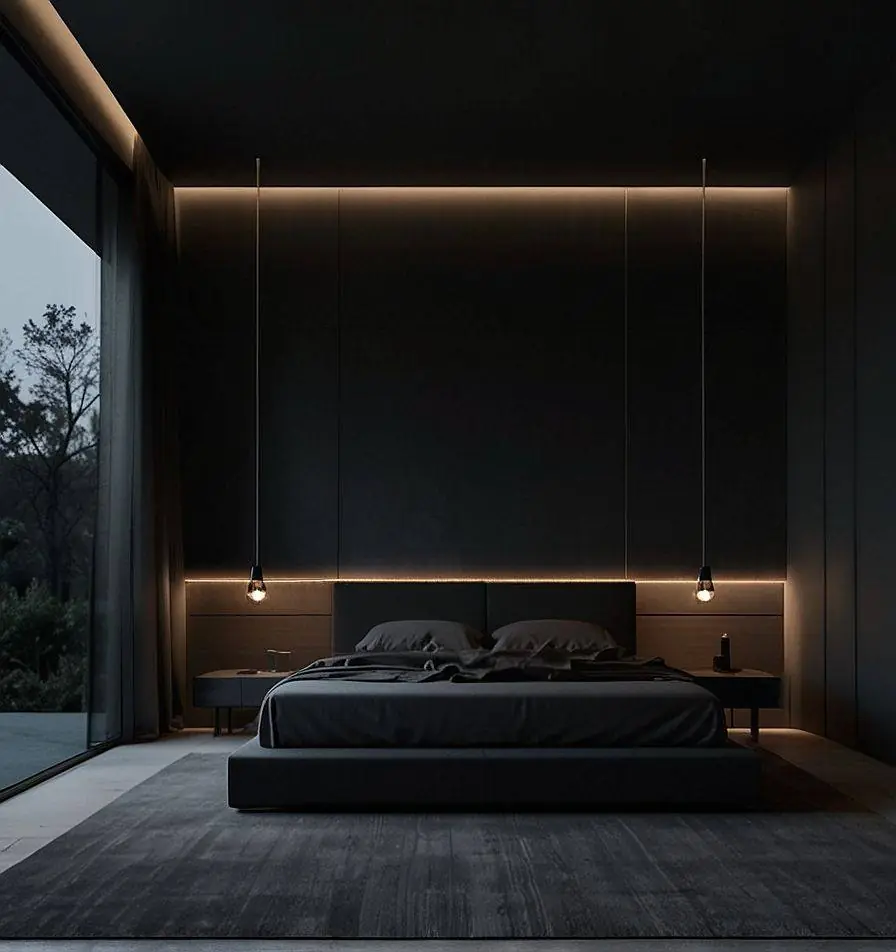
Sleep tourism has become a category of its own. Fortune Business Insights sized it at 84.65 billion dollars in 2025 with a projection of 96.13 billion for 2026, and Hilton's 2026 trends report found 56 percent of travellers naming rest and recovery as their first reason for travelling, a shift it named Hushpitality. Estimates vary widely between research houses, which is itself worth knowing, but the direction is not in doubt.
What has not changed is how a room is presented. Four things decide whether you sleep, and none of them appear in a listing.
Darkness
Most rooms at any level leak light. A standby diode, a line under the door, a curtain that stops two centimetres short of the frame, a marina lit all night, a motion-triggered lamp in a corridor. None of it registers when you are awake and all of it registers when you are not. Ask for a photograph taken at night with the lights off. It takes the owner thirty seconds and it tells you more than the entire listing.
Silence
Ask what is audible at seven in the morning and at one in the morning, and ask separately. A road that is quiet at night can be a delivery route at dawn. A bay that is silent in May can hold a tender at anchor in August. Single glazing on a village street is not a detail, it is the whole night.
Temperature
Deep sleep begins with a fall in core body temperature. A bedroom that cannot be brought down a few degrees before bed will cost you, either in the heat itself or in the noise of the unit trying to remove it. The question to ask is not whether there is air conditioning but whether it is quiet enough to leave running, and whether the bedroom has its own control.
Air
A sealed room with four people in it holds stale air by three in the morning. Ask whether the windows open on a quiet side, whether there is mechanical ventilation, and when the filters were last changed. In a city apartment, ask what the street does to the air at rush hour with the windows open, because that is the only way to ventilate most of them.
Four questions, thirty seconds each. They decide a third of your stay and they are almost never asked.
This is the part of an address that a photograph cannot show and that a season cannot compensate for.
What this changes in a stay
These four variables, darkness, noise, temperature and air, are exactly what our sister practice Lif8 measures in buildings for a living. That is where our own way of looking at a bedroom comes from, and it is the part of our selection that takes the longest. We ask the owner or the hotel the four questions before we retain an address, and we ask them again about the specific room you will be given, because a property can hold up on three of them and lose the stay on the fourth.
Frequently asked
What temperature should a bedroom be for good sleep?
Cooler than a living room, and above all controllable from inside the room. What matters as much as the number is that the cooling is quiet enough to leave running all night.
How do I know a room will really be dark?
Ask for a photograph taken at night with the lights off, and ask specifically about standby diodes, the gap under the door and how far the curtains overlap the frame.
Is sleep tourism just marketing?
The label often is. The underlying variables are not: darkness, noise, temperature and air are measurable, and they are what separates two rooms that photograph identically.